The majority of us know that Bahrain is somewhere the Middle East, but, if quizzed, how many westerners would know exactly where it is?
Copywriter Kate Bateson knows….as she recently spent a week there, living like a local. Read on to find out what Kate thought about her seven days under a cloudless, blue sky.
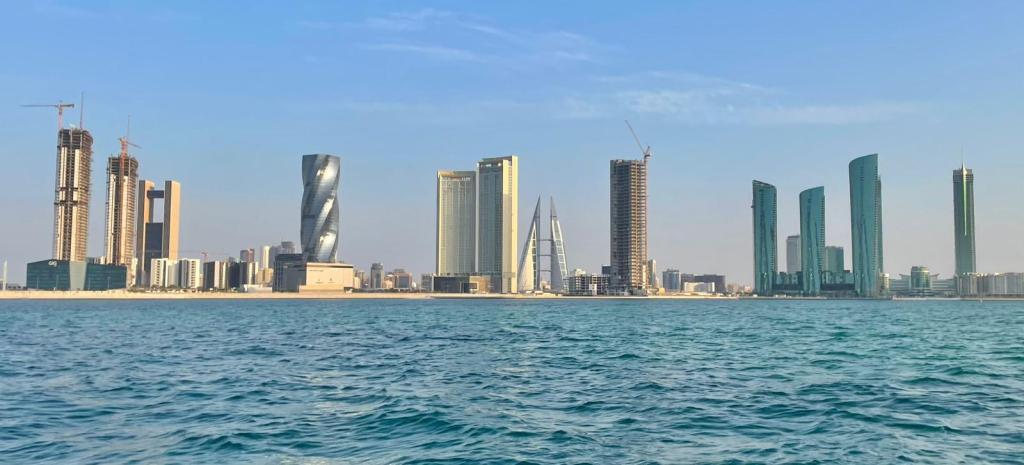
When we told people we were going to Bahrain for half term, the most common reaction by far was “where?” As Middle Eastern destinations go, it’s rarely top of the list for tourists – most are attracted to neighbouring UAE and the glitz and glamour of Dubai – but we were heading there to visit my brother and his family, who’ve made the capital Manama their home for the past two years.
As anyone with friends or relatives abroad will tell you, one of the benefits is the opportunity to view places through the eyes of a local, and this trip was no different. No tourist trap camel farms for us: for seven days we experienced the country as expats, living a very different kind of life under a cloudless blue sky.
Where is Bahrain?
The Kingdom of Bahrain is an island country, situated in the Persian Gulf between Saudi Arabia and Qatar. Bahrain is made up of an archipelago of islands which are mostly desert and is connected to Saudi Arabia via the 15-mile long King Fahd Causeway.
What’s Bahrain like to visit?
Given that most people don’t know where Bahrain is, it’s hardly surprising that they don’t know what’s there either. And, to be honest, as the entire island is only 30 miles long by 10 miles wide – about the size of Anglesey – there’s not a lot. However, that’s part of its appeal.
That said, Bahrain welcomed 9.9m visitors in 2022, with tourism on the increase, drawn to what it calls “our superb island setting; our cosmopolitan, relaxed way of life; our rich history and culture; exciting major events; delicious food and varied shopping choices”.
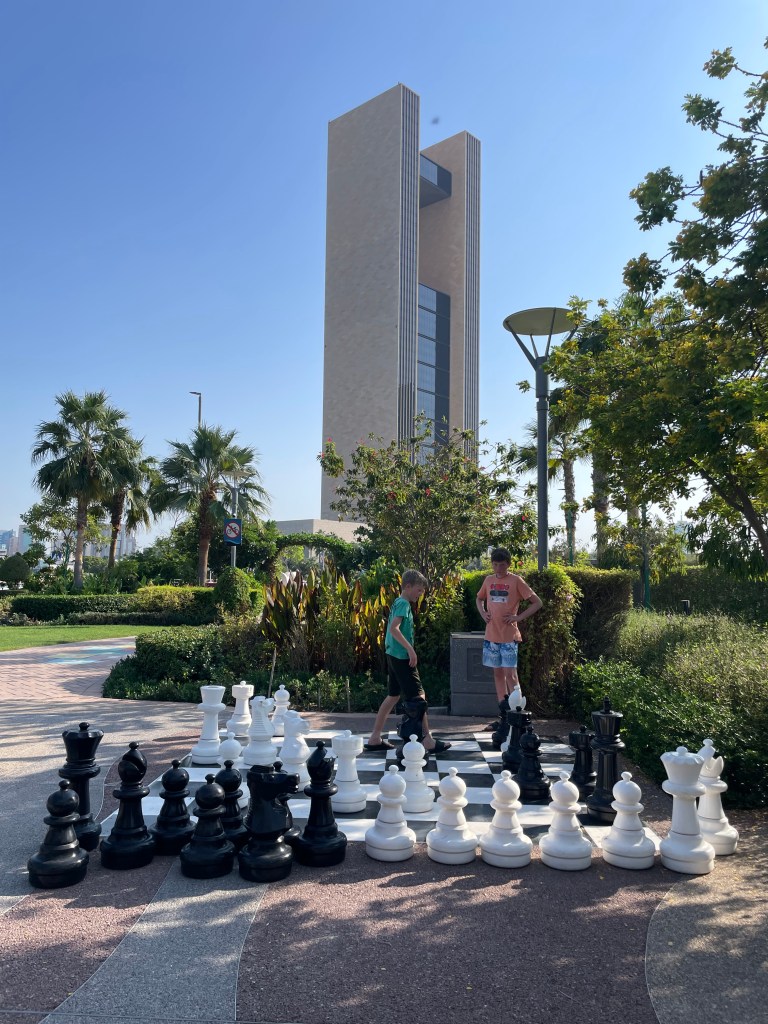
Much like many of the cities we call home in the UK, Manama’s not packed full of thrill-a-minute attractions and natural wonders of the world. But, be honest, when did you last go and visit the biggest tourist attraction where you live?
In our week spent living locally, it became clear that wherever you call home, what you really want is a pleasant environment, friendly people, good restaurants where you can meet up with friends and a handful of activities to fill the weekends.
And in Bahrain, that’s what you get.
Does Bahrain have beaches?
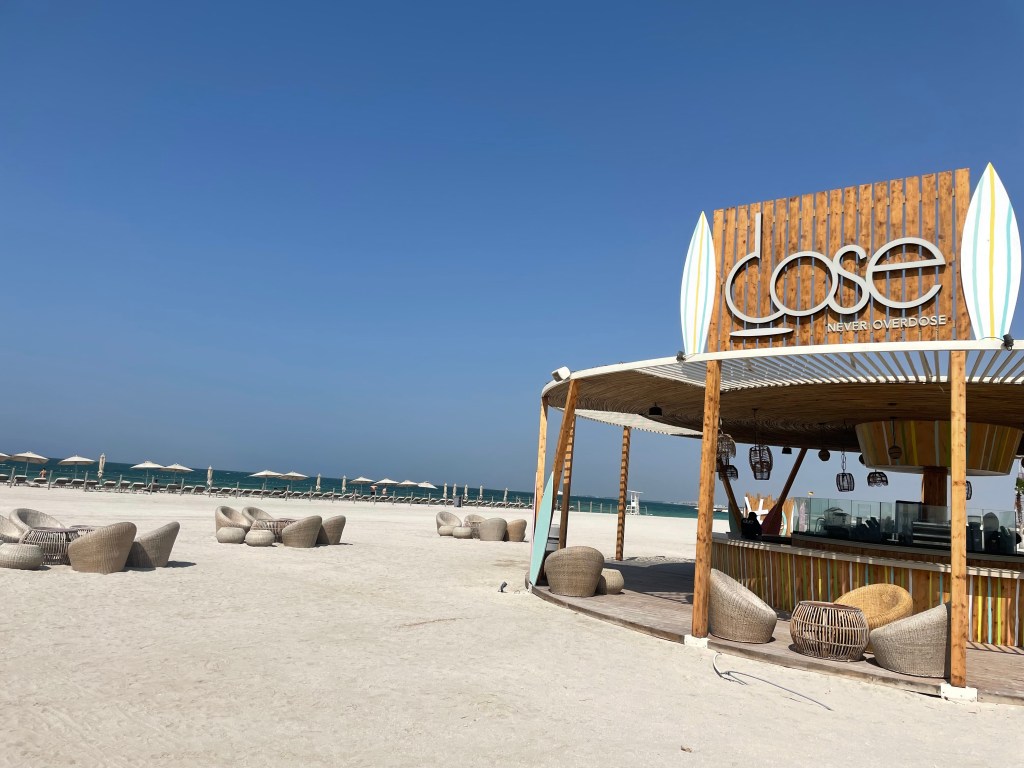
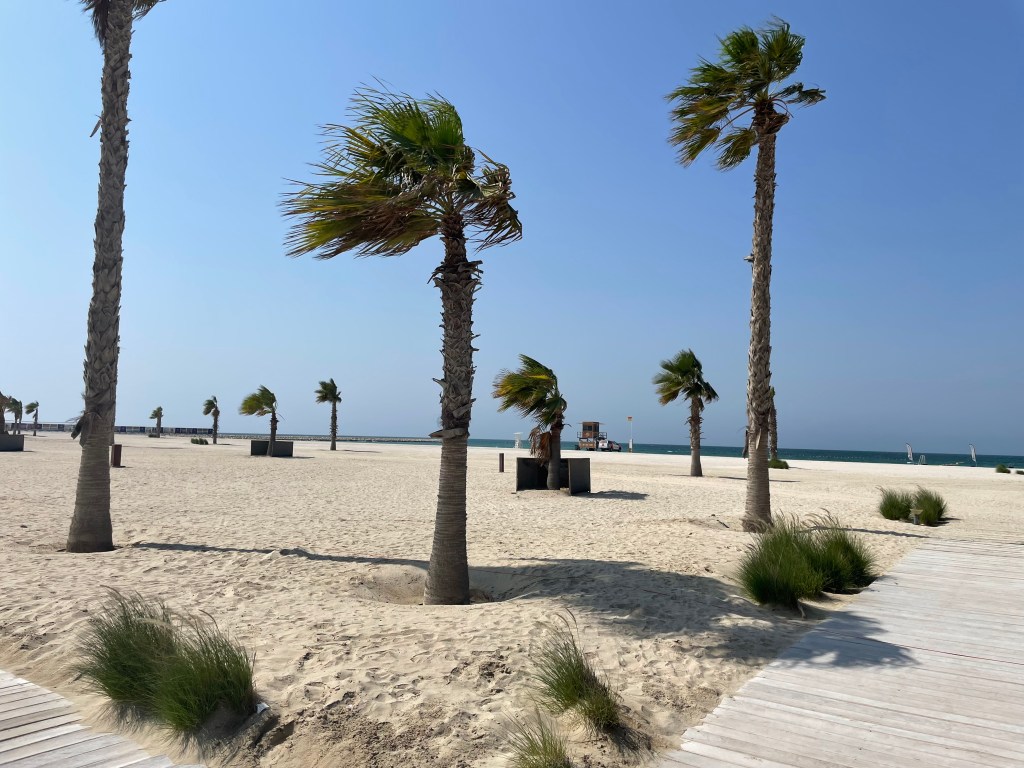
Despite being surrounded by water, the island of Bahrain doesn’t boast endless stretches of white sand. In fact, the south of the main island doesn’t boast much at all. It’s covered with a mixture of military bases and oil fields. However, closer to Manama there are beaches to be found and we headed to Al Jazair beach, about half an hour out of the city.
Al Jazair beach is private. This means there’s a small charge for entry (2 Bahraini Dinar (£4.34/$5.32/€4.00), redeemable against refreshments or a sun lounger) but it’s maintained – the sand is cleared daily and there are clean, air-conditioned toilets and a couple of cafes for drinks and snacks.
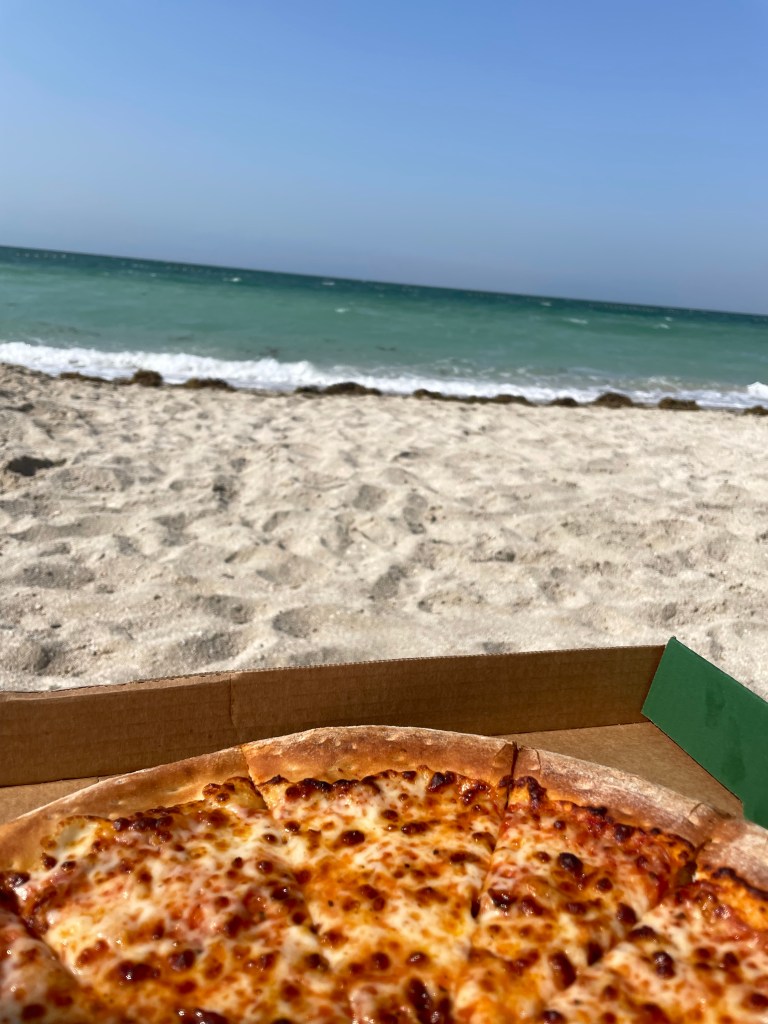
We chose to indulge the kids with a Papa John’s takeaway (western brands are a very common sight out there) and sat munching pizza while the waves lapped at our sun loungers. Because it’s a private beach there are no restrictions on dress for women, making it popular with all nationalities.
What’s the weather like in Bahrain?
Bahrain is an arid country with mild, pleasant winters and summers that are very hot and humid. The hottest month is August, with an average daily temperature of 35.5 degrees (I think it’s much more). The coldest it gets is in January, when the average temperature is 17.2 Celsius.
Bahrain islands to visit
Those looking for a more unique beach experience tend to take to the seas, heading for one of the tiny islands that make up the archipelago. Bahrain consists of 51 natural islands and 33 artificial ones, and while many are either linked to the main island by bridges or not suitable for day trips, there’s still plenty of choice.
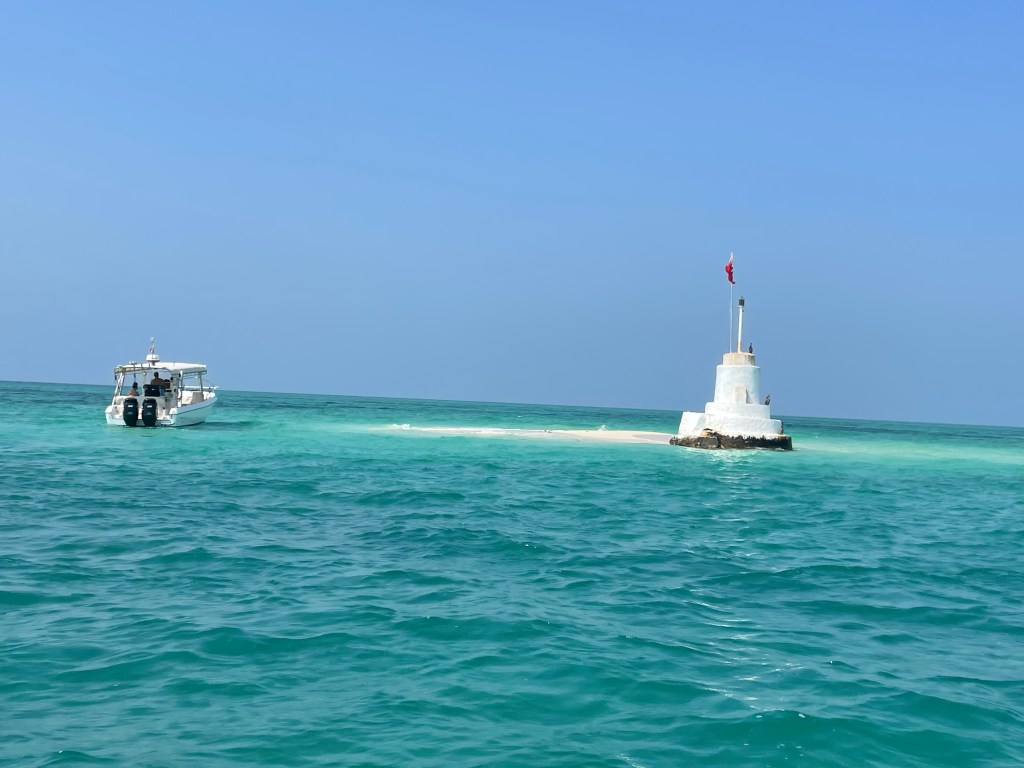
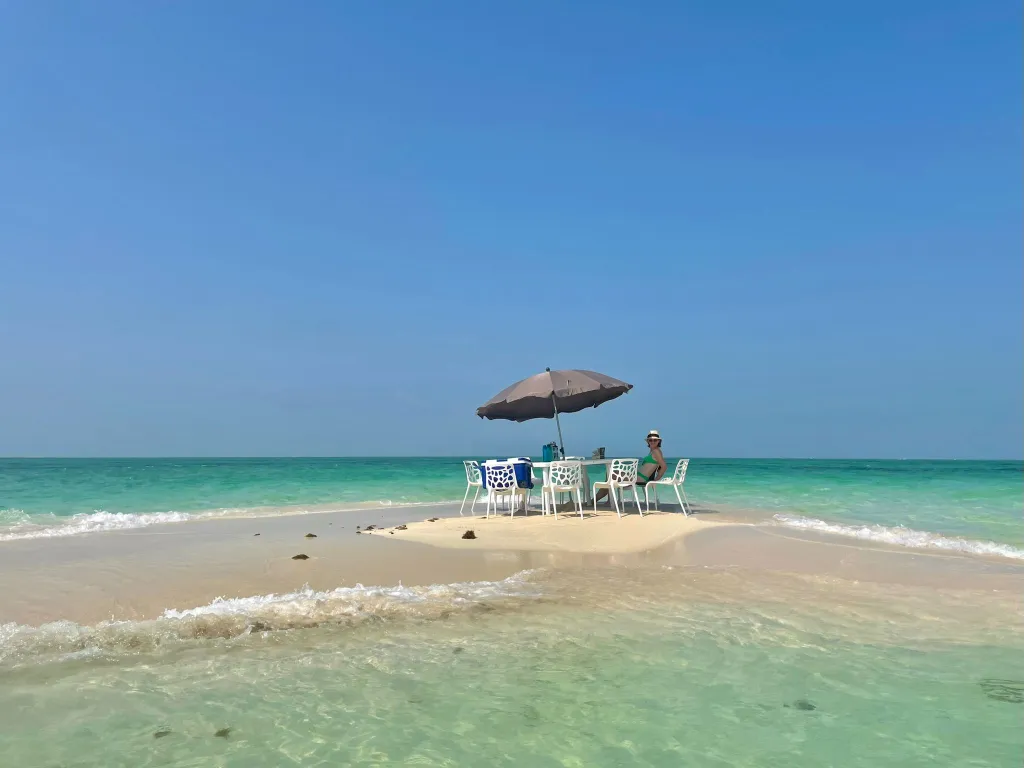
A fun option, especially with groups of friends or on special occasions, is to take a boat to the sandy island of Jarada, a curved strip of soft white sand that shrinks and expands according to the tides, so you’re never quite sure what will be there from one day to the next!
We had a private boat to the island which was a big splurge – £220 per family – but it was utterly worth it for such a unique experience. There is also an option to go on a shared boat trip, which reduces the cost.
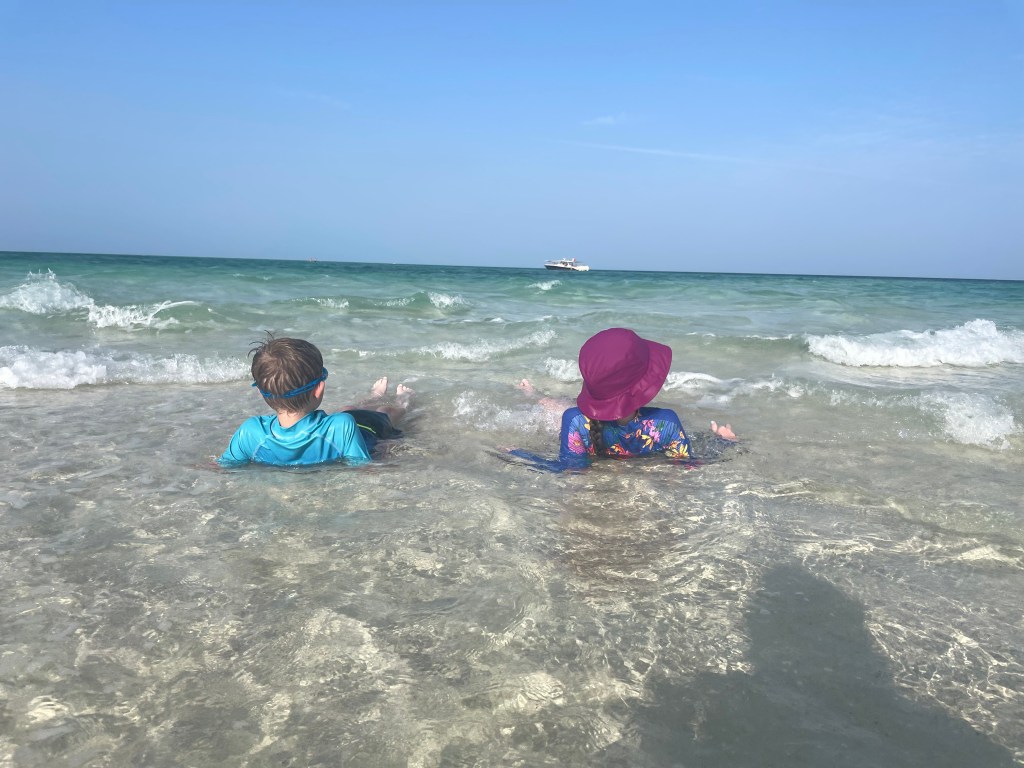
On our visit, a high tide meant a relatively small amount of visible sand, although it was possible to wade out for quite a distance into the warm, turquoise waters. For much of the day we had the place to ourselves, so with fish flashing silver all around we splashed, snorkelled and swam to our heart’s content. Our boat’s crew provided a table and chairs and set up a BBQ and we returned to the beach to eat, watching the sunlight dancing on the sea as waves washed over our feet.
What is there to do in Bahrain?
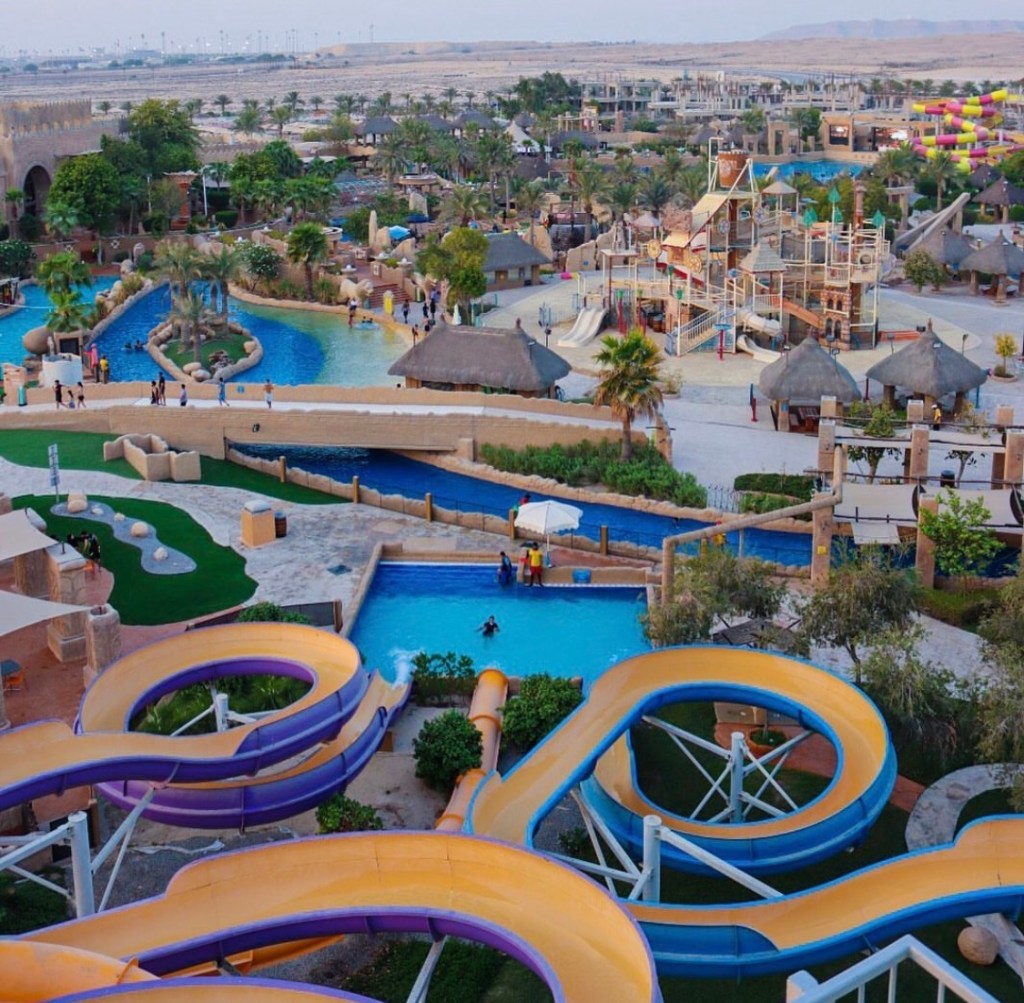
There were more waves, albeit the man-made kind, at The Lost Paradise of Dilmun Water Park (entry is 15BD for adults, 7.50 for children), the largest standalone water park in the Middle East and another favourite day out with both Bahraini and expat locals.
Featuring more than 20 slides and attractions for all ages, it’s a lot of fun and was a definite highlight of our trip. According to the website, the park can accommodate 5,000 people, but on the day, we were there I’d have been surprised if there were 2,000, despite it being the half-term holiday.
My brother and his family lamented the queues, but having recently queued for 40 minutes for rides at Center Parcs, we were overjoyed to only have half a dozen people in front of us, at the most! Bikinis and swimsuits can be worn, but as the attraction sees a wide range of visitors, many women choose to cover their shoulders, with some wearing shorts too.
It’s a personal preference though rather than an enforced rule, and the same is true throughout much of the country. It’s just one of the things that makes Bahrain different from other Gulf nations and contributes greatly to the relaxed atmosphere.
What to wear in Bahrain
While Bahrainis generally dress in traditional clothing, non-Muslims are not required to cover up in the same way.
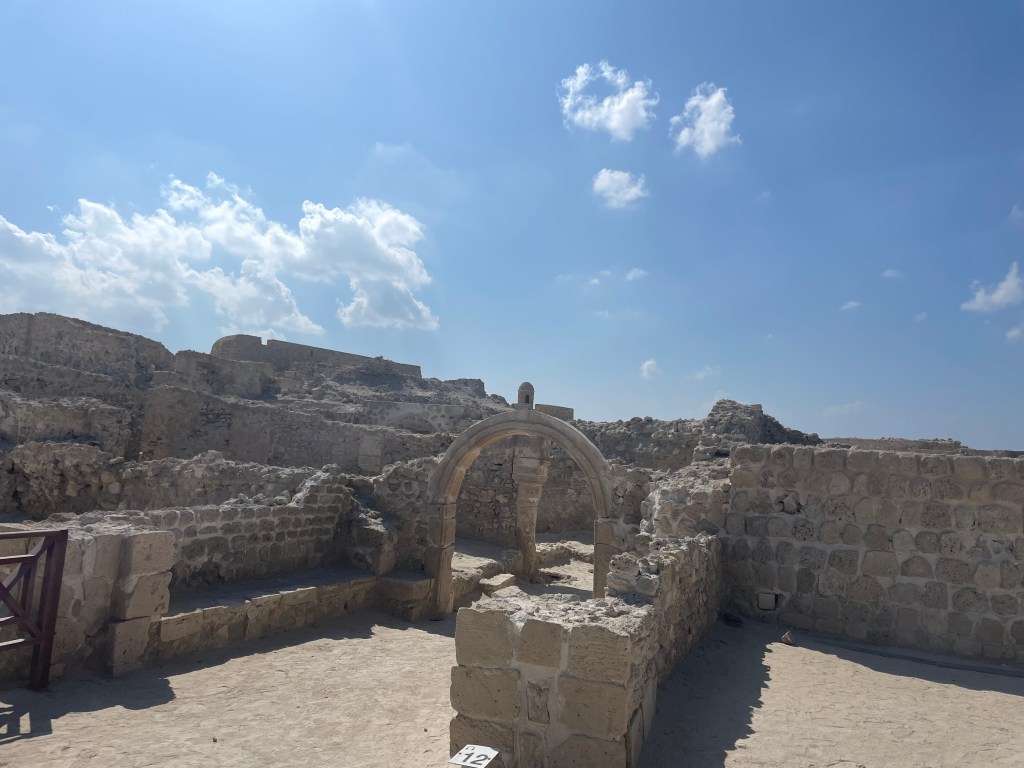
Contrary to much of what we read online before travelling, in the areas we visited, around Bahrain Bay, the Fort (a UNESCO world heritage site) and the local Al Janabiya district, we felt completely comfortable in our usual summer wardrobe of shorts, t-shirts, vest tops and dresses. Although none of these could be described as particularly ‘skimpy’, we certainly didn’t feel the need to cover our shoulders or knees.
As with any country you’re visiting for the first time or are unfamiliar with, it’s always advisable to look online for advice on what to wear and always follow advice on how to behave in public.
It can be helpful to carry a pashmina if you’re heading to one of the malls, but this is as much for protection from the fierce air conditioning as is it for modesty.
Where to eat in Manama
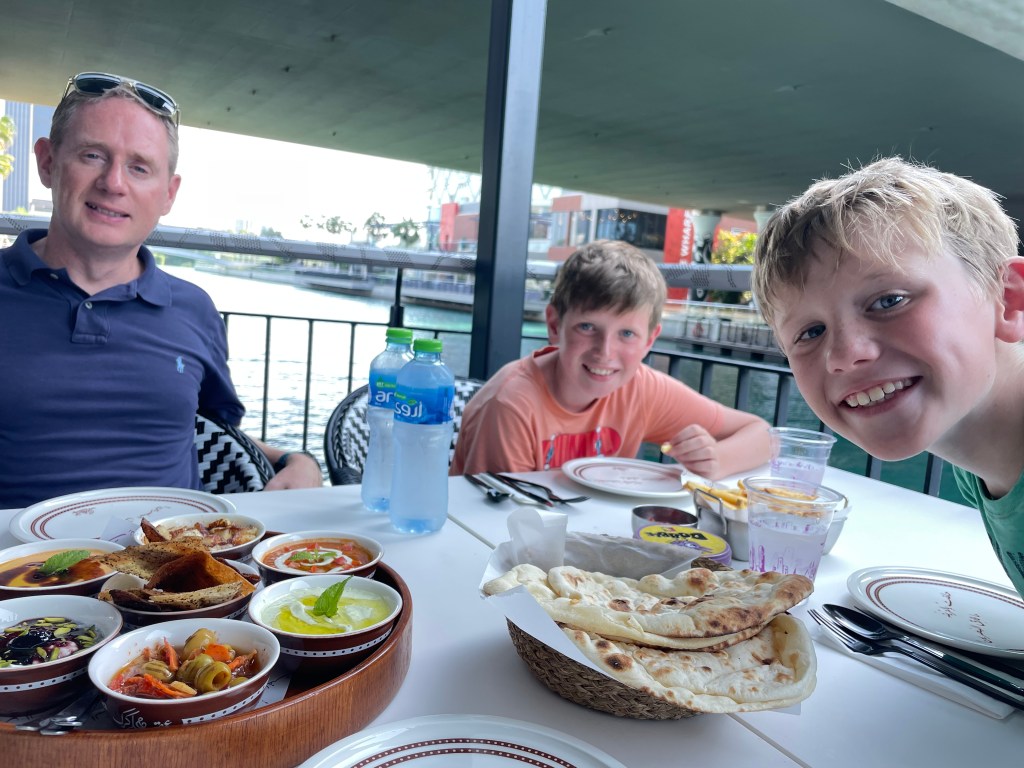
More than half (52%) of Bahrain’s population is made up of expats, so it’s hardly surprising that restaurants in the country span a broad spectrum with European, Asian, Indian and Middle Eastern cuisines all readily available, often on the same menu.
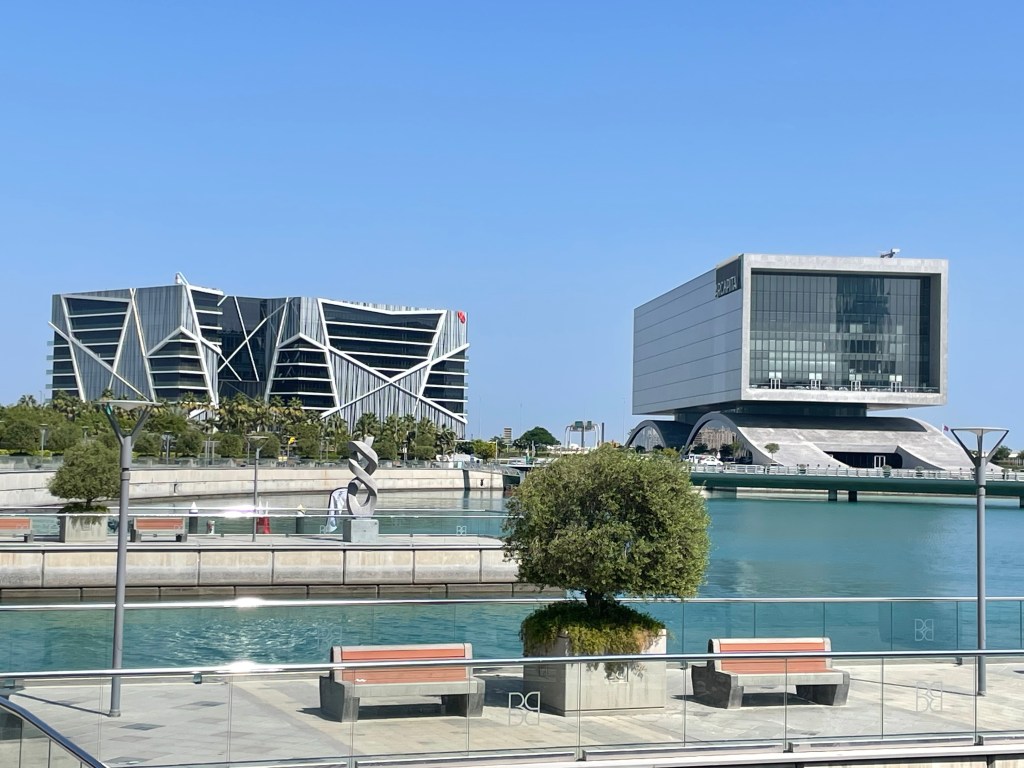
While this might not feel particularly authentic at first, it certainly makes travelling with fussy children a lot easier, and we found the quality of all the food to be excellent. As we were staying with family we mostly ate in, but when we did venture out, we headed to Bahrain Bay, a popular destination with local Bahrainis and expats.
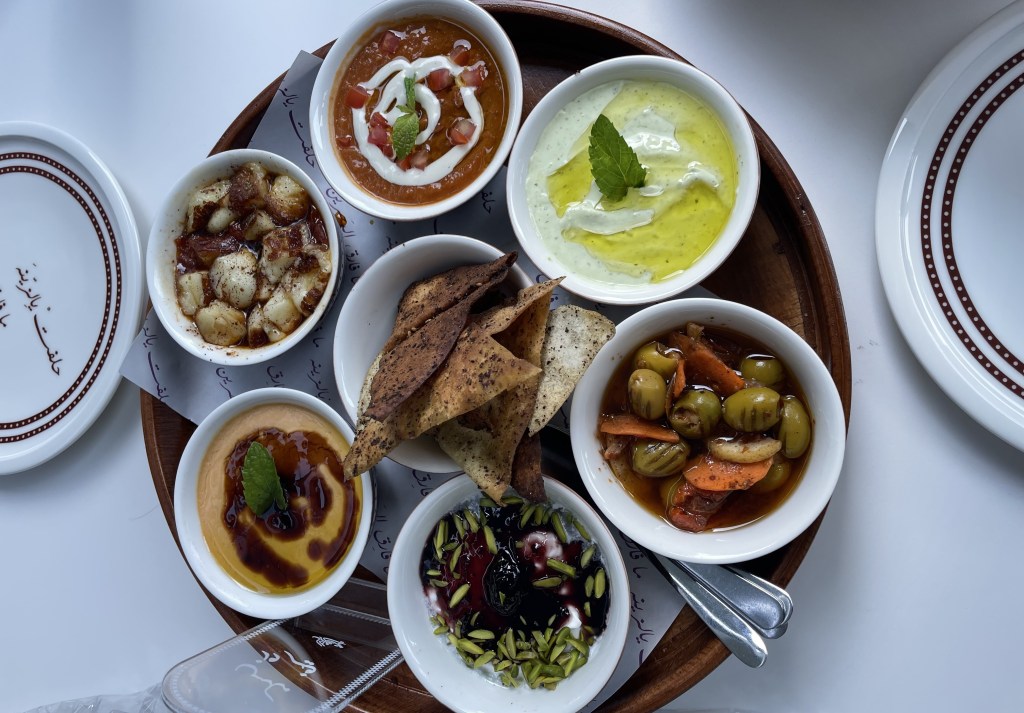
We especially liked Agaily & Karak where my husband and I scooped up mounds of creamy basil labneh and red pepper humous with pieces of crunchy, zaatar-spiced bread (and the children were delighted with their fries and cheese khoubz, a cross between a filled pitta and a calzone).
Food was a similar price to a decent restaurant in the UK, with Middle Eastern food being the best value.
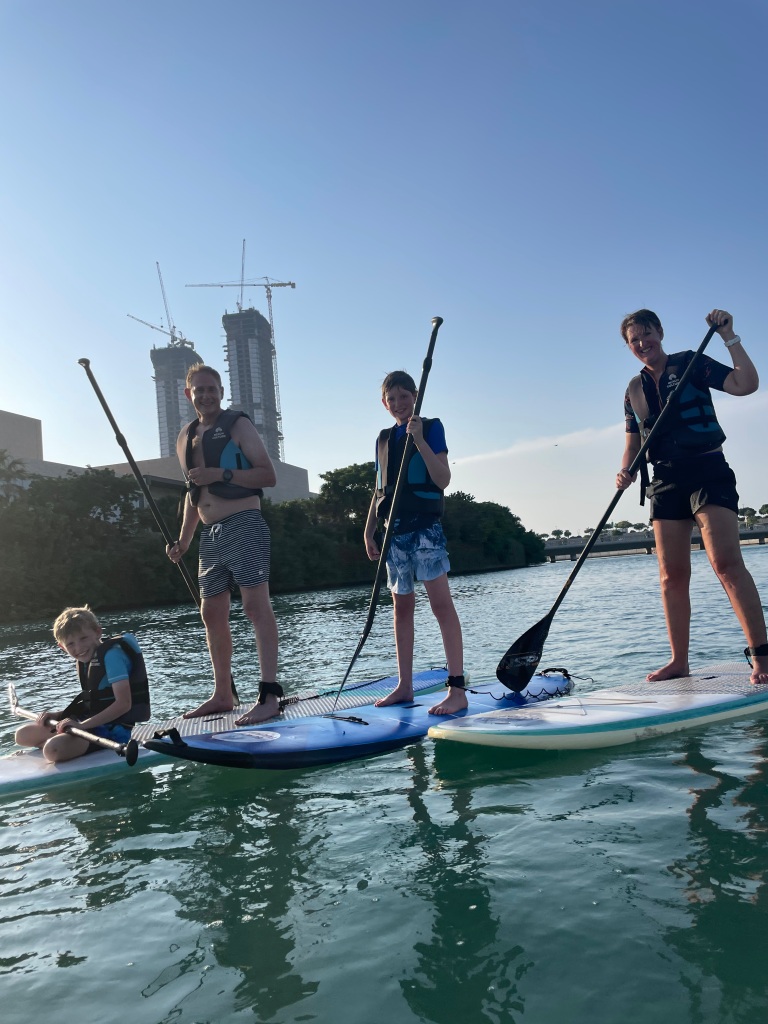
It was just the thing to set us up for our sunset paddleboarding session. A regular activity for many people who live in the capital (their New Year’s Eve sessions are particularly popular), we joined some locals and our guide to meander around the bay – and take a few dips into the water – as the sun disappeared behind the skyline.
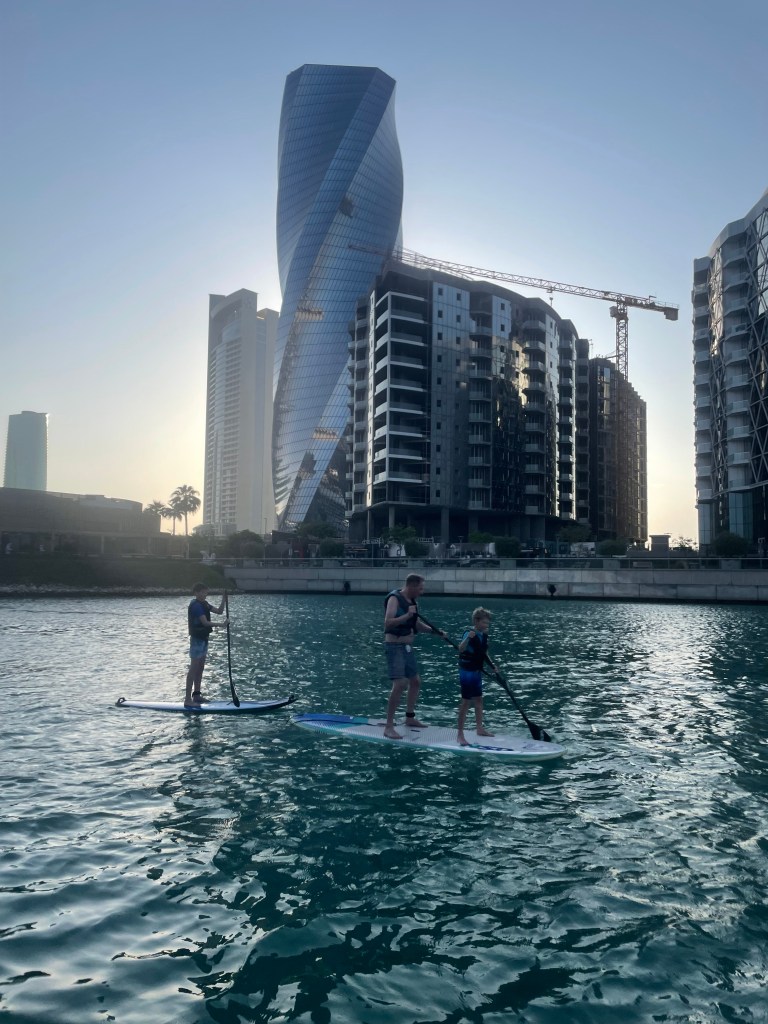
It cost around 9BD per board for an hour and we rented them from Beach Culture.
How easy is it to get to Bahrain?
There’s no shortage of airlines flying to Bahrain and the flight is manageable at six to seven hours. Once you’re there, public transport is non-existent, so you’re reliant on hiring a car or using local taxis. We found Ubers were a reasonable price when we didn’t want to drive.
We flew Gulf Air, with the overall price being around £2,000 for a family of four.
Is Bahrain worth a visit?
Small, yet perfectly formed, I can see why Bahrain is so popular with my brother and the other expats who live there. It’s relaxed, it feels safe and the sun shines all year round.
As a place to visit, Bahrain had all that we wanted for a week in the sun. It’s definitely the type of place you can ‘fly and flop’ at one of the immaculately maintained resorts, but there are some pretty unique reasons to get up off your sun lounger too.
There aren’t many destinations where you can paddleboard in the shadow of towering skyscrapers, explore the crumbling walls of a sixth-century fort (free entry) and plummet down a sheer drop in a rubber ring, all within a 40-minute drive. Which is why, hopefully, we’ll be back.