
A foodie and history buff’s guide to Poland’s royal capital
Krakow in southern Poland had been one of culture junky and gastronomer Viv Gee’s bucket list destinations for years, drawn not only by the renowned beauty and vibrancy of this former capital, but also because of her desire to visit the Auschwitz-Birkenau concentration camp and honour those who suffered and perished there.
Given that 2025 marks the 80th year anniversary of when this infamous extermination camp was liberated from German Nazi occupation and to recognise the victims/survivors’ wish for this dreadful part of world history never to never be forgotten, she chose April this year to fulfil her wish and visit.

Having done their homework on what to see and do, she travelled with husband Max, best friend Maria and her partner Graeme. This was no chill-out break. Spending three nights and four full days in the city, they booked advance tours to Auschwitz, Schindler’s Factory, the Jewish ghetto, old city and Wawel Cathedral and castle, taking the opportunity to fully immerse themselves in the culture and history, of which Krakov has plenty.
The Sun Lounger asked Viv what her lasting impressions were of her long weekend in Krakow; the memories which will stay with her forever. Here’s what she said:
“Krakow is an incredibly beautiful, clean and prosperous place.”
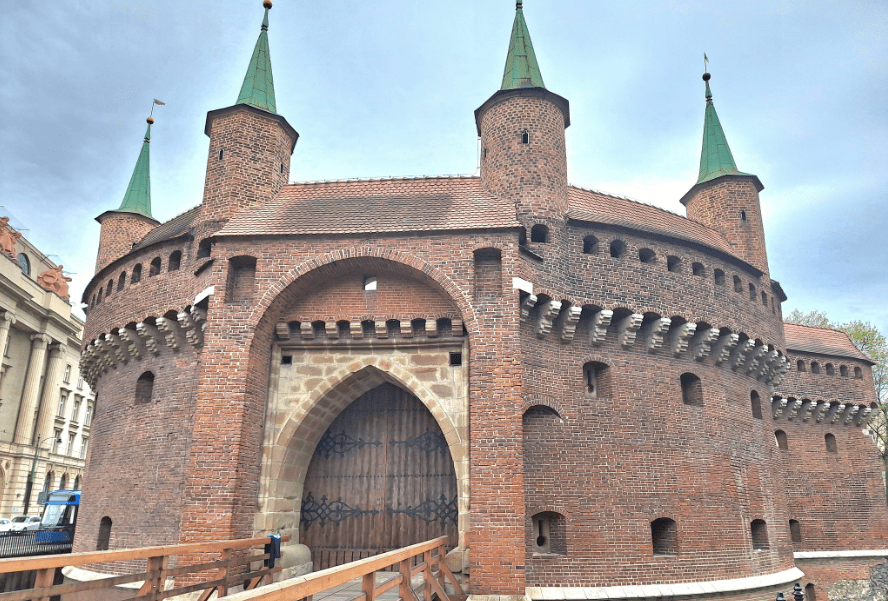
Krakow is the second largest city in Poland and its was the official capital of the country up to 1596. Its old town is a UNESCO World Heritage Site and Krakow has the oldest medieval square in the world. It’s also home to one of the oldest universities in the world.
In 1038, it became a royal seat of Polish monarchs which disbanded in 1918 when it became a republic.
The City of Krakow is split into several districts, each with its own distinct character. The Old Town, which is where we chose to stay, is the centre of Krakow and is filled with historical buildings and monuments. It is packed with restaurants, galleries and bars. It has been a UNESCO World Heritage Site since 1978 and is car free.
“Not only is it a beautiful destination, but your money will also last longer than London or Paris.”
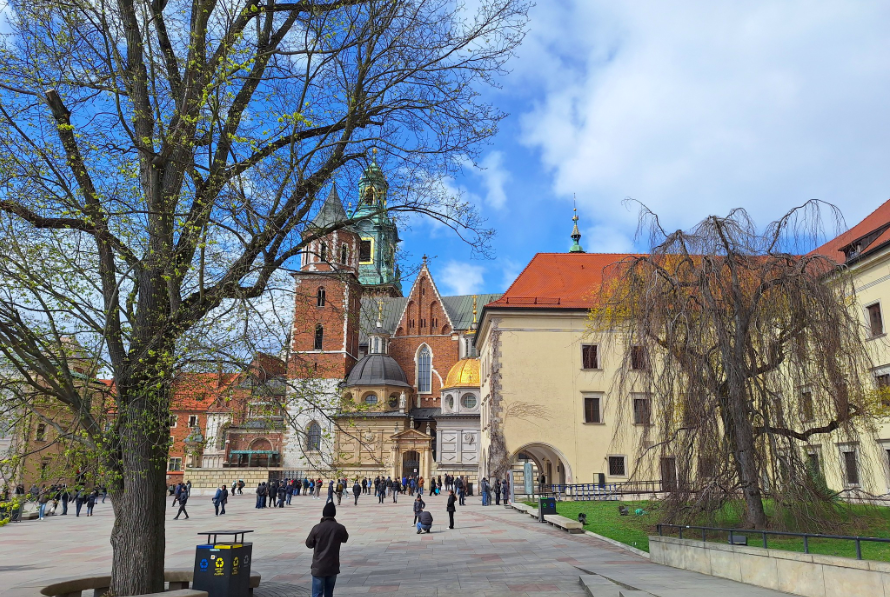
Krakow is cheap compared to many European cities. The official Polish currency is the zloty (abbreviated to zl). When we visited, one Polish zloty was the equivalent to 20p (UK pound sterling).
Krakow has accommodation to suit every budget range. Use Booking.com to compare the best prices. As a rule, you can expect rooms to be about 45% to 55% cheaper in Krakow than in London and 55% to 65% cheaper than Paris.
However, I’ve been told prices go up as you get closer to the peak seasons (Easter and June-August) and rooms are harder to get, so I would recommend booking well in advance. The other thing to consider is location. The closer you are to Wawel Hill, the more expensive it is.
A two-course meal with a glass or two in a decent restaurant in Krakow should cost you the equivalent of about £21.00 – £25.00 per person, whereas the same is likely to be at least double in the UK. A regular-size cappuccino will cost you around £1.70 and a pint of beer is about £1.80.
“Krakow is a beautiful, vibrant city that has a thriving cafe, bar and nightlife scene. It has more bars per square metre than any other city in the world.”
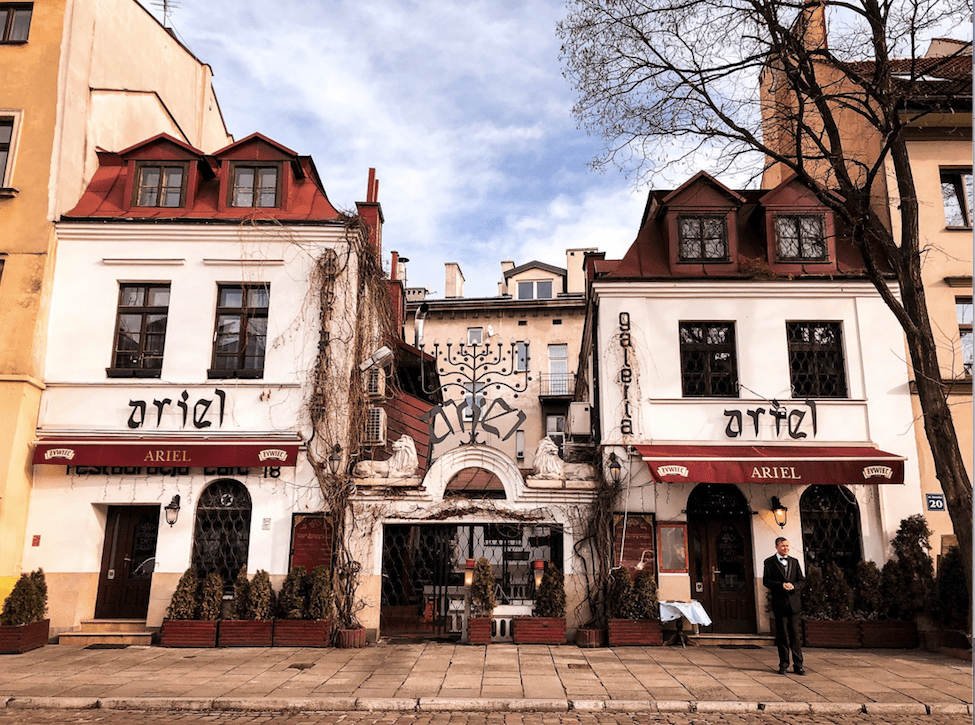
Krakow is a food paradise! The Old Town is packed with eateries, many of which are housed in vaulted cellars or courtyards. Aside from Polish restaurants, you’ll find Italian, French, Indian, Middle Eastern, Japanese, Mexican and more. There are a lot of Jewish restaurants in Kazimierz (the Jewish quarter) and Krakow has numerous ‘new Polish’ restaurants which do creative things with seasonal ingredients.
Many of the Polish restaurants also serve food from neighbouring countries such as Lithuania and Russia and these dishes highly influence Polish cuisine.
Budget travellers will be pleased by their options in Krakow where you will find a handful of low-cost eateries called ‘milk bars.’ They sell affordable and filling Polish food and serve cafeteria style, so you know exactly what you are getting. At the other end of the scale, there is no shortage of fine dining and Michelin star restaurants.
Krakow has loads of street food options scattered around the city, sold in carts, street trucks if you want a snack on the go.
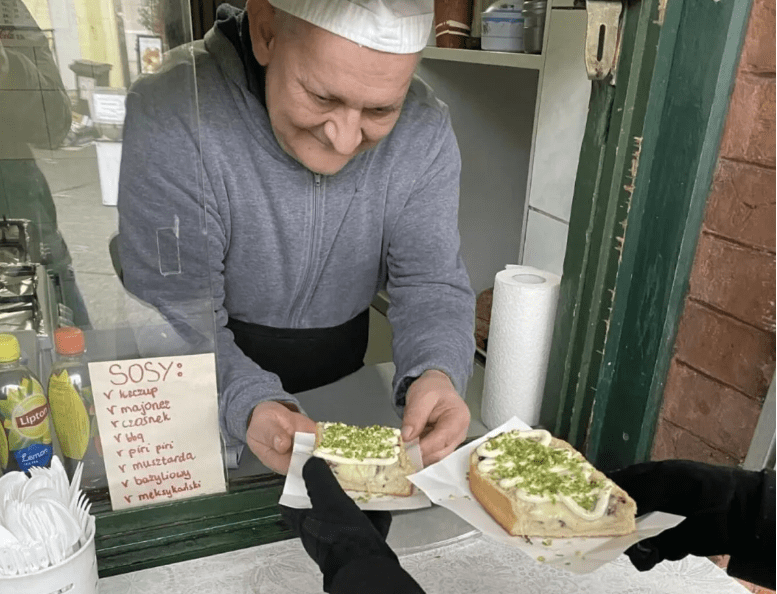
Does Krakow cater for vegans and vegetarians? Yes! What was a surprise is the amount of vegetarian and vegan restaurants and the choice of non-meat options on the menu in most restaurants.
“The centre is compact and walking is the best way to get around Krakow Old Town or to Wawel Hill.”
The Polish public transport system is incredibly good and very reasonably priced.
Trams are great for moving between the Old Town, Kazimierz and Podgorze, and visiting Eastern and Western Krakow.
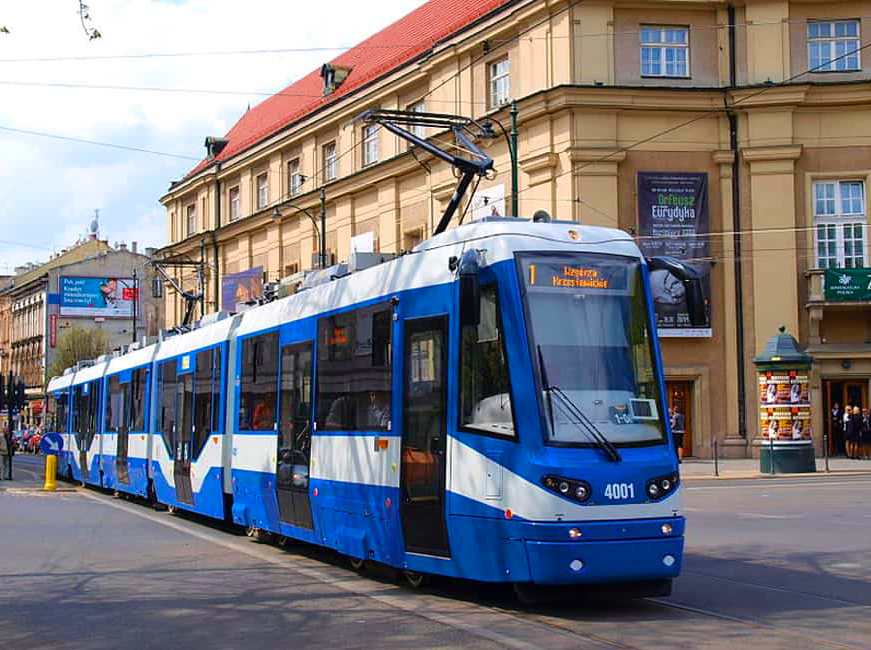
Tickets bought on trams can be used on buses and vice versa, and rather than using single trips or returns, each ticket allows you a certain time on the transport system, meaning journeys with changes do not need two separate purchases. Tickets can always be bought on the tram, from a machine on board and from machines at many of the stops (including the airport). Example costs of tickets:
20 minute = zl 4 (£0.80)
90 minute = zl 8 (£1.60)
24 hour ticket = zl 17 (£3.41)
48 hour ticket = zl 35 (£7.03)
72 hour ticket = zl 50 (£10.04)
It is also worth knowing that a Krakow City Card gives unlimited use of the bus and tram network in the city.
One other way to getting around the city is by bike or scooter. Krakow is very bike-friendly and has cyclist lanes for many of the main roads that criss-cross the old town centre and its surrounding districts.
Those who are familiar with London’s Boris bikes will see the sight of council bikes in Krakow. The racks that hold them are dotted around the Old Town and Kazimierz area. The rental system is pre-paid and can only be accessed online (at www.kmkbike.pl).

The final means of transport around Krakow is via the Vistula River. There are multiple River Cruises that can reach some tourist attractions via the water.
“My perception is that Polish culture is not one of small talk and superficiality.”
From the few interactions with Polish people on this trip, I found them to be friendly, helpful, informative/intelligent and very straight to the point! Everyone we spoke to expressed a passion and patriotism for their country and for the beautiful city of Krakow.
Poland is predominately a Roman Catholic country and we were told that Poles have a high regard for family and that they tend to be large and interconnected. Traditional family values are respected and valued.
According to our taxi driver, unlike some tourist destinations, Krakow residents want people to come to their city and they welcome visitors with open arms.
“Polish people have had to learn to adapt to brutal occupation, with a strong resilience in the face of impossible odds.”
Poland has been invaded by foreign powers many times and has over a century of foreign rule. Their resistance against Nazi Germany and the Soviet Union during the Second World War is a testament to Polish fortitude amid incredible suffering.
After the invasion of Poland at the start of World War II, the Jewish population was forced into a ghetto where they were sent to extermination camps such as Auschwitz-Birkenau, Belzec and Plaszow.
At the start of the war, 70,000 Jews resided in Krakow (a quarter of the total population). Today, the Jewish population is less than 1,000 but what remains in the district of Kazimierz are remnants of the Jewish community and the influence it had on this city. Ironically, since Schindler’s List was filmed here, it has become a thriving district of Krakow.
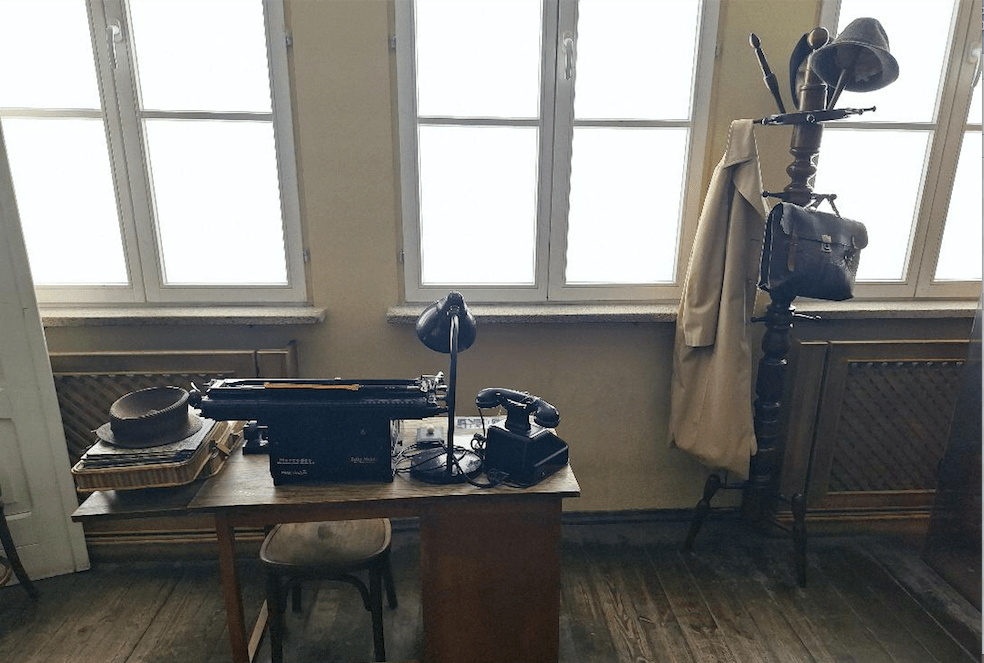
Oskar Schindler, a Nazi businessperson, selected employees from the ghetto to work in his factory saving them from the camps which is now turned into a fantastic immersive museum.
After WWII, the city became under control of the Soviet Union. The Stalinist government of Poland constructed the country’s largest steel mill in the suburb of Nowa Huta.
Poland’s war did not end in 1945. It continued with the Communists until the early 1990s.
“There are no birds or bird song here, or any evidence of animal life. It is very, very eerie.”

The German Nazi concentration and extermination camp of Auschwitz-Birkenau is synonymous with genocide and the Holocaust. More than a million Jews, plus hundreds of Poles and Romas were murdered here during WWII.
It is a complex of over 40 concentration and extermination camps. It consists of Auschwitz I, the main camp in Oswiecim and Auschwitz II-Birkenau, a concentration and extermination camp with gas chambers. The camps became a major site of the Nazis’ deplorable ‘final solution.’
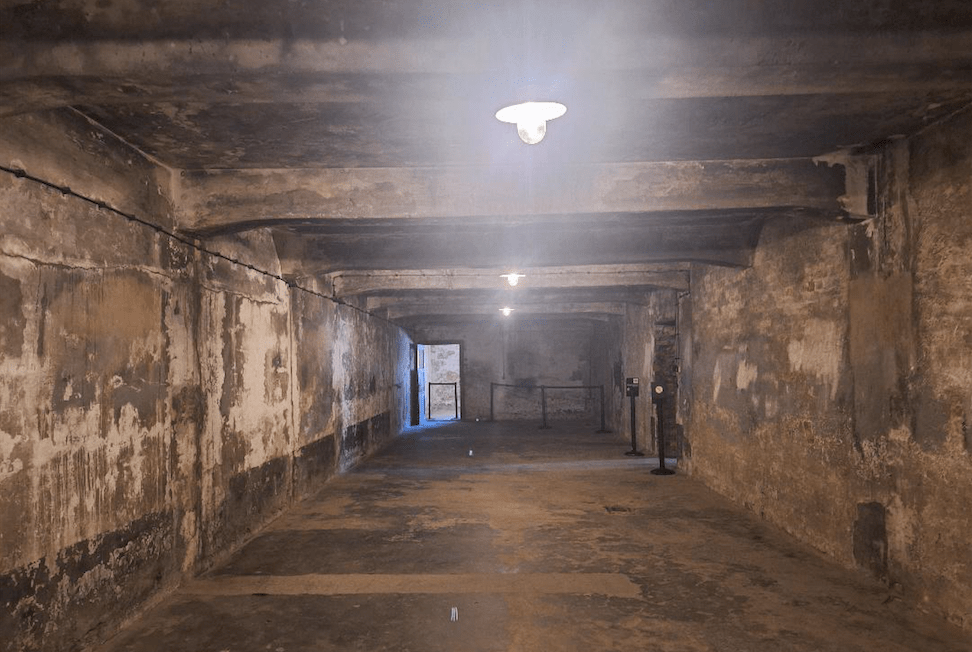
Auschwitz is a converted army barracks. The initial transport to Auschwitz consisted solely of Poles for whom the camp was established. The first gassings took place in block II in 1941. At least 802 prisoners tried to escape, 144 successfully, and in 1944, prisoners launched an unsuccessful uprising.
As the Soviet Red Army approached, the SS sent most of the camp’s population on a death march to camps inside Germany and Austria. Soviet troops liberated the camp on 27 January 1945. In 1947, Poland founded the Auschwitz-Birkenau State Museum and has been named a World Heritage Site by UNESCO.
“We could not comprehend what happened here. Even now, it seems unthinkable.”

Auschwitz is the site of the largest mass murder in an individual location in history.
We were all physically and emotionally moved and heartbroken for all of those who perished and how they were treated before they were murdered.
Nothing prepares you for this visit … particularly the scale and size of Auschwitz-Birkenau. It housed 100,000 prisoners and is the size of a town/small city.
In the words of the guide: “Thoughts and words are where this started (i.e. Mein Kampf). Be careful with these. Never forget that there is only one race: the human race.”
The tour began in the visitors’ centre of the main camp and proceeded through the infamous gates bearing the slogan “Arbeit Macht Frei” (“Work Sets you Free”) to the main point for prisoners where they would be called for morning roll. The sign is a replica, the original having been stolen, recovered and put on display in the museum. When you walk up to the infamous gates, the names of all victims are announced on speaker phones.

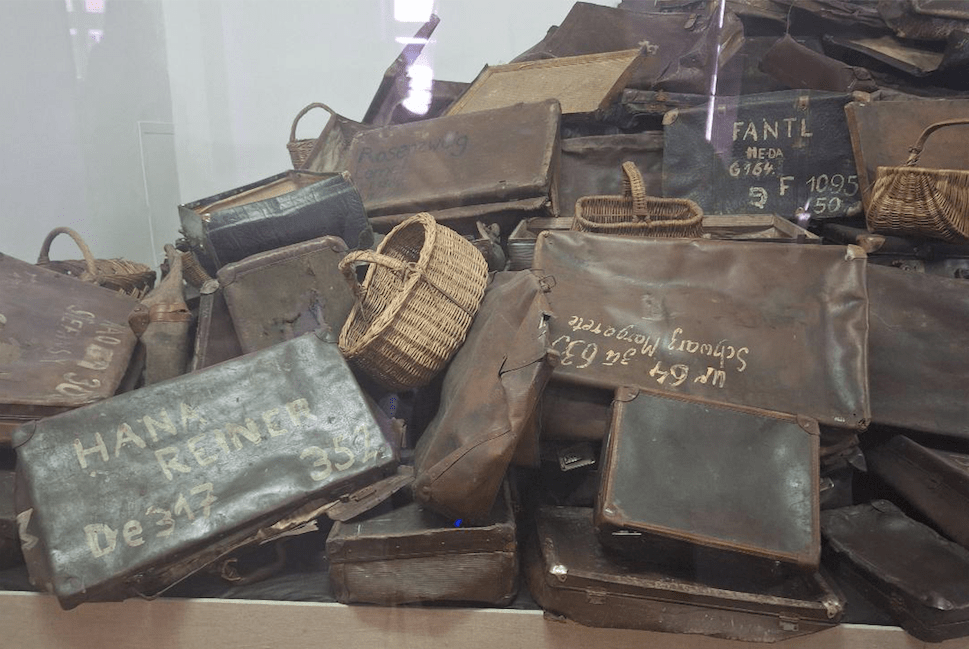
Each block holds its own horrors, such as the photos of new arrivals in cattle cars, helping each other, unaware that they’d be gassed shortly, mounds of prosthetic limbs, spectacles and shoes, mountains of battered suitcases with addresses on them, since their owners believed they’d eventually be going home.
Particularly shocking is the sea of human hair that was collected from victims just before their murder and then used to weave cloth (I was too upset to take a photo) and a photograph of a group of women and children who were walking to the gas chamber.
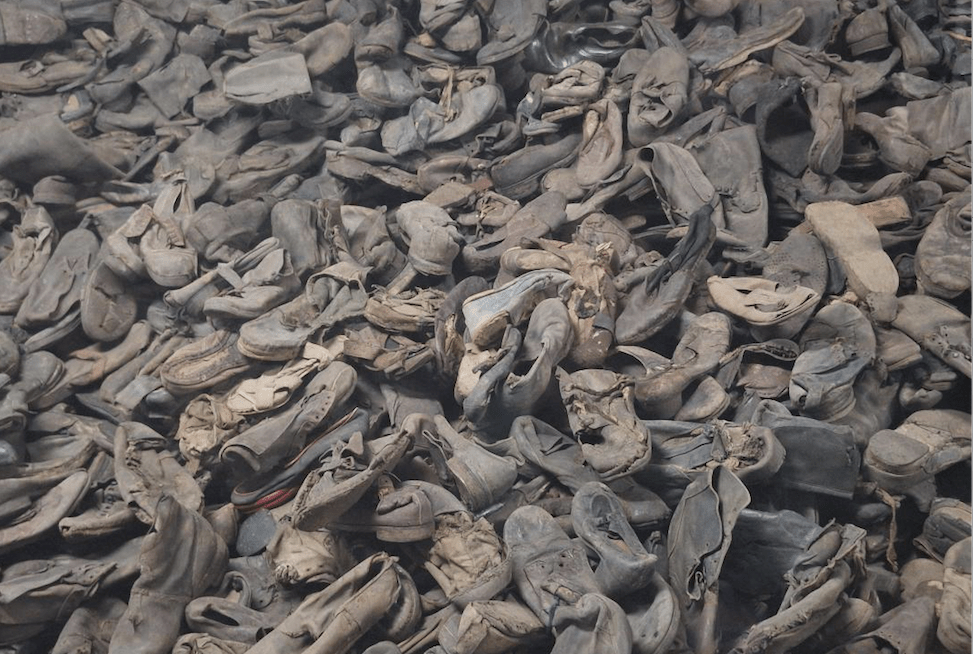
For those who, somewhat unfathomably, don’t believe the Holocaust happened, this is evidence that it did!
Block II is known as the notorious ‘Death Block’. While most of the killings took place in Birkenau, it was here in this small courtyard where thousands of victims were lined up and shop in front of the Wall of Death. The basement contains cells where prisoners were tortured, held in solitary confinement and starved to death. At one end of the grounds, you can enter a gas chamber and crematorium – the only one not destroyed by the Germans in their attempt to hide their crimes.
Although much of the camp was destroyed by the Nazis, the barracks that remain standing, the long perimeter of barbed wire and the endless row of isolated chimneys, convey the unthinkable scale of the killing.
Life in the Camps
Life for the prisoners began at 4.30am for the men and earlier for the women. There were few toilets and a lack of clean water. It was only in 1943 that Auschwitz II installed toilets and washrooms. The toilets were sewage channels covered by concrete.
Prisoners received half a litre of coffee substitute or herbal tea in the morning but no food. A roll call happened each morning when inmates lined up outside in rows to be counted. After roll call, prisoners moved to their place of work to begin a working day, which was normally 11 hours long. No rest periods were allowed.
Lunch was three quarters of a litre of watery soup at midday with meat in the soup four times a week and vegetables three times. The evening meal was 300 grams of bread, often mouldy, part of which the inmates were expected to keep for breakfast the next day.
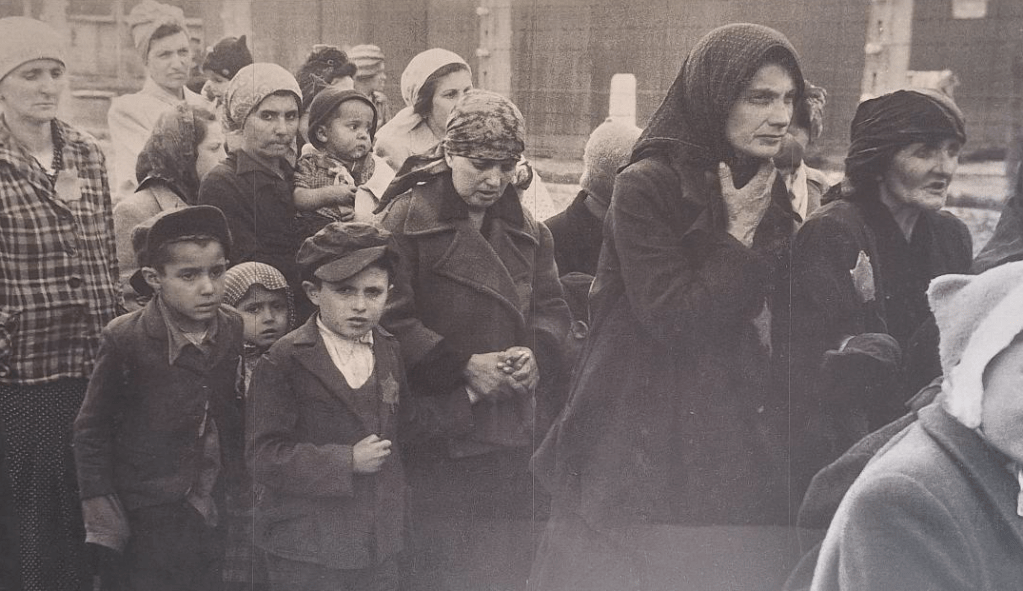
A second roll call took place at 7pm, during which prisoners might be hanged or flogged. If a prisoner was missing, the others had to remain standing until they were found. Inmates slept in long rows of brick or wooden bunks or on the floor. Sunday was not a workday, but prisoners had to clean the barracks and take a weekly shower.
Tips on visiting Auschwitz-Birkenau
- The concentration camp is about an hour’s drive from Krakow
- Eating is prohibited when you arrive in the camps. However, there are a few snack bars near the main parking area and a canteen style restaurant near the main entrance
- From April to October, tours are compulsory, with entries between 10am and 3pm.
- There are strict security checks and searches before you enter
- Book at least one month in advance. The place was packed with tourists in off peak session and places get fully booked for all operators
- Before our trip, we pre-booked an Auschwitz-Birkenau guided tour. This included a hotel pick up and drop off, an English-speaking guide, transport by an air-conditioned minivan and all admission tickets and fees. It does not include food.
- End to end (including travel) our visit took 7 hours, so a full day.
We booked our visit via Booking.com and it cost £47.00 per person.
All you need to know about getting to Krakow and where to stay:
Where to stay in Krakov:
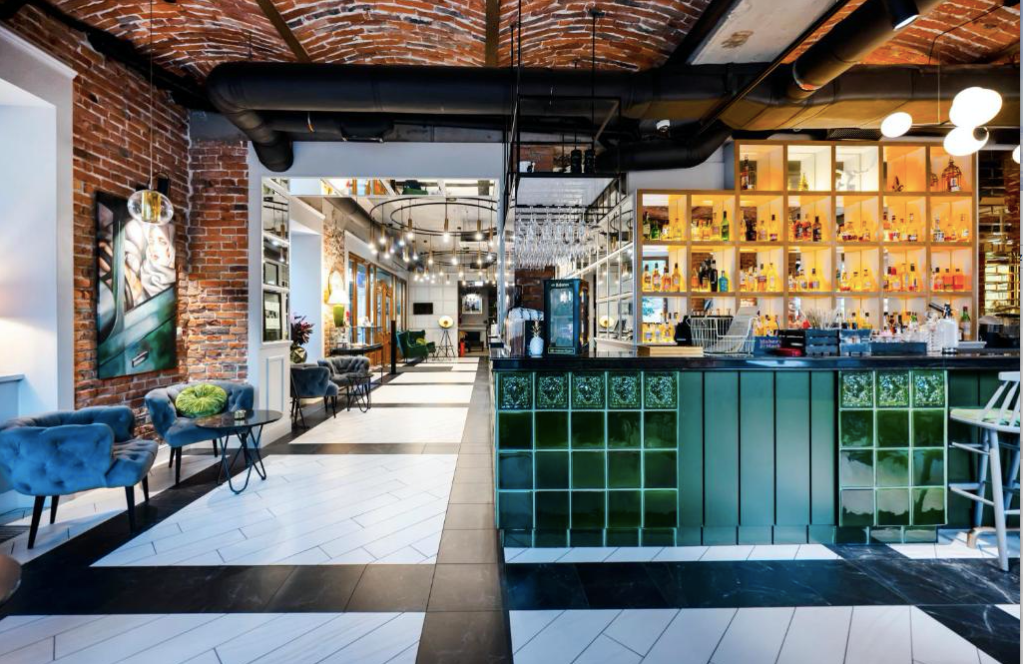
We stayed at the lovely boutique Hotel Indigo located within minutes of Krakow’s Old Town, next to Florian’s Gate, in an area once populated by artists. I’d highly recommend it for anyone visiting the city.
What to see in Krakov:
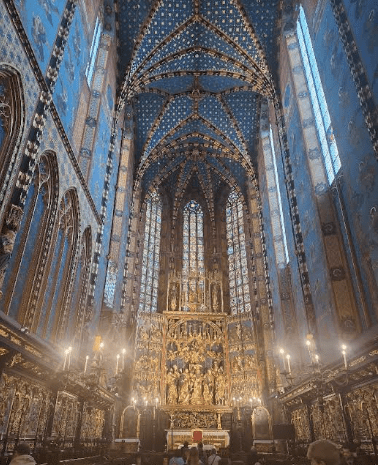
This is a beautiful red brick church that is has two towers of different heights. We toured the simply exquisite interior.
Tickets cost: £10.00 per person
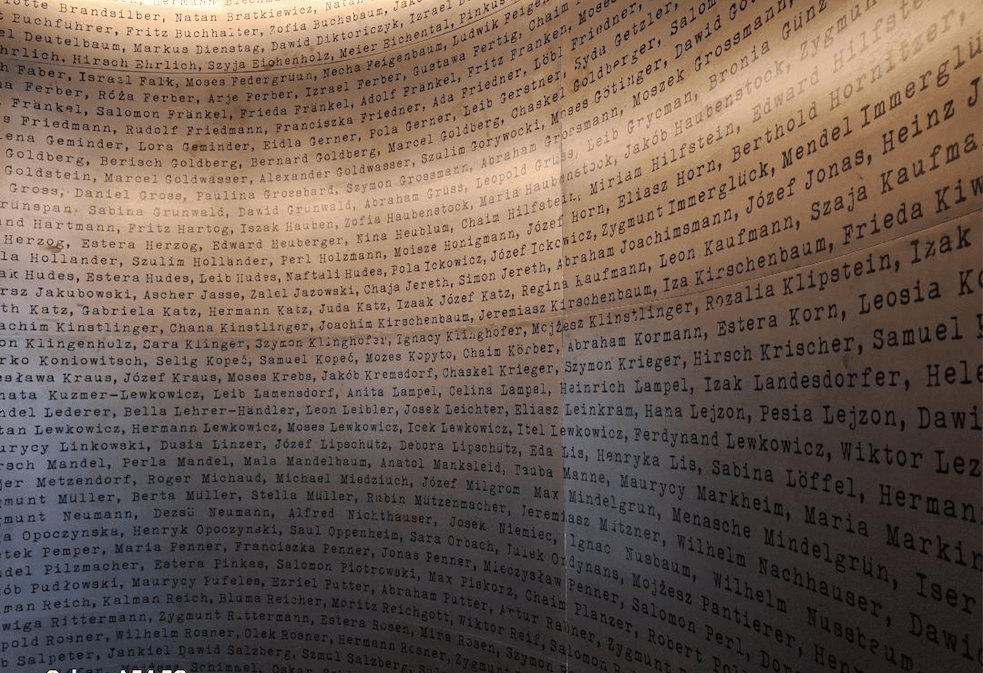
This is an interactive museum which is housed in the former factory of Oskar Schindler, the Nazi businessperson who saved the lives of more than 1,000 members of his Jewish factory workers during the holocaust, made famous by Steven Spielberg’s 1993 film Schindler’s List.
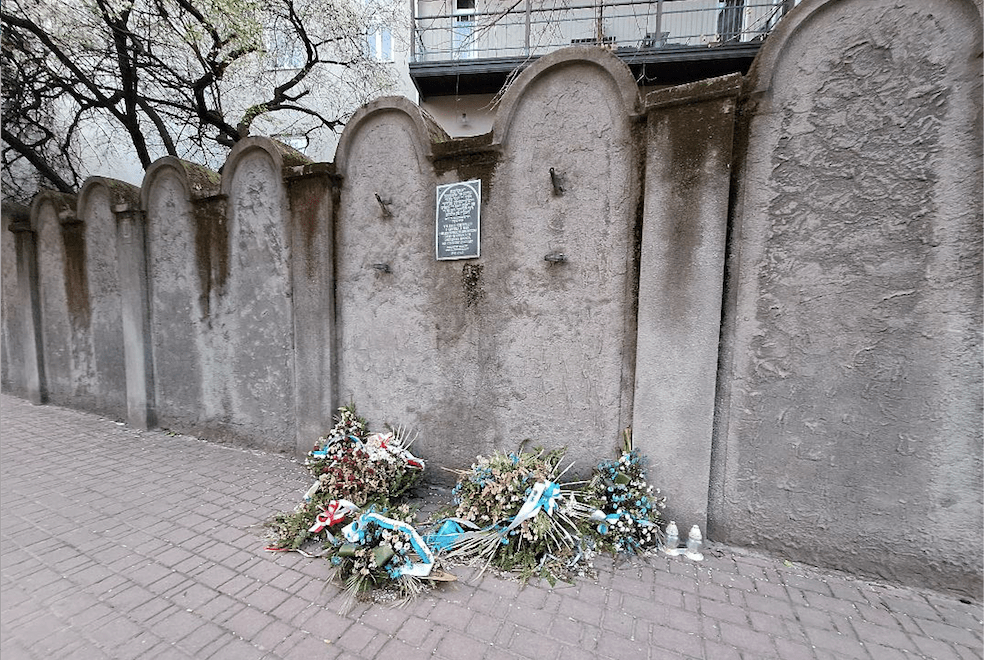
All the walls are gone apart from a few that serve now as a memorial. The Germans built the walls in the style of gravestones to remind the ghetto dwellers of their fate. Plaques are everywhere here, commemorating the thousands of people who died here, many of whom were children.
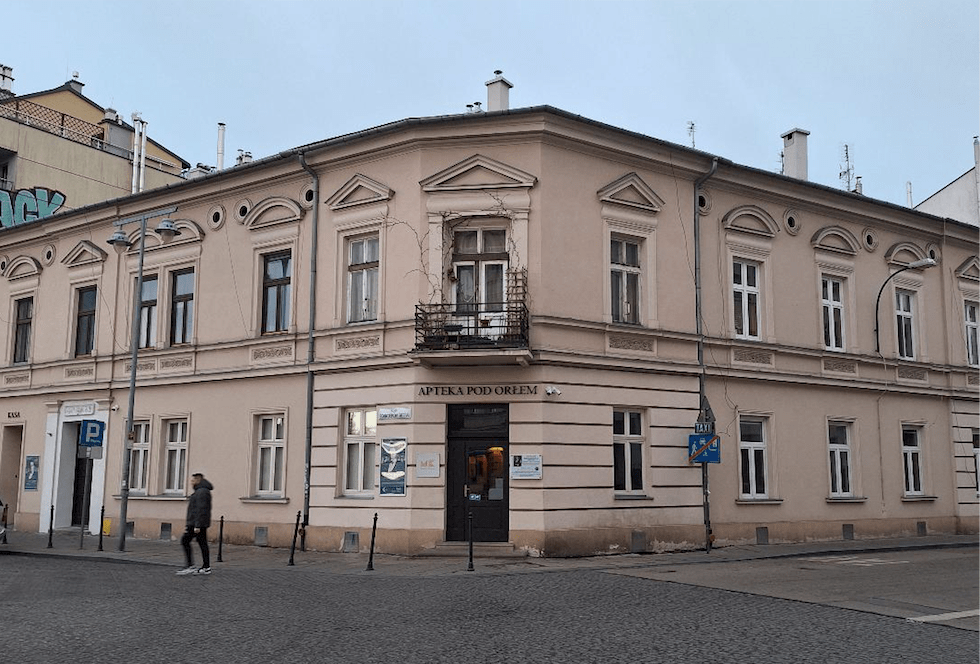
The route took us to Pharmacy Under the Eagle (above) and told the story of owner Tadeusz Pankiewicz, a Polish gentile who risked life and limb trying to help the Jewish residents of the ghetto during WWII. He was allowed to operate the pharmacy until the final deportation. Pankiewicz dispensed medicines (often without charge), carried news from the outside world and even allowed use of the establishment as a safe house on occasion. The pharmacy’s interior has been restored to its wartime appearance and tells the story of the ghetto’s day to day life and the role of the pharmacy.
Tickets cost £28.00 per person
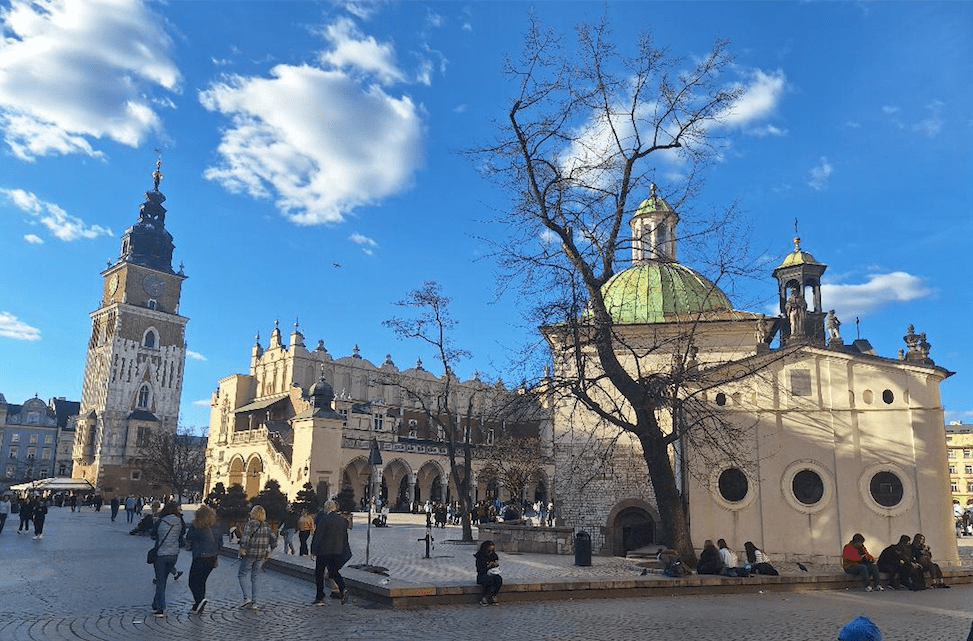
Tour of the Old Town
We visited the Collegium Maius University, the oldest surviving university building in Poland and one of the best examples of Gothic architecture in the city
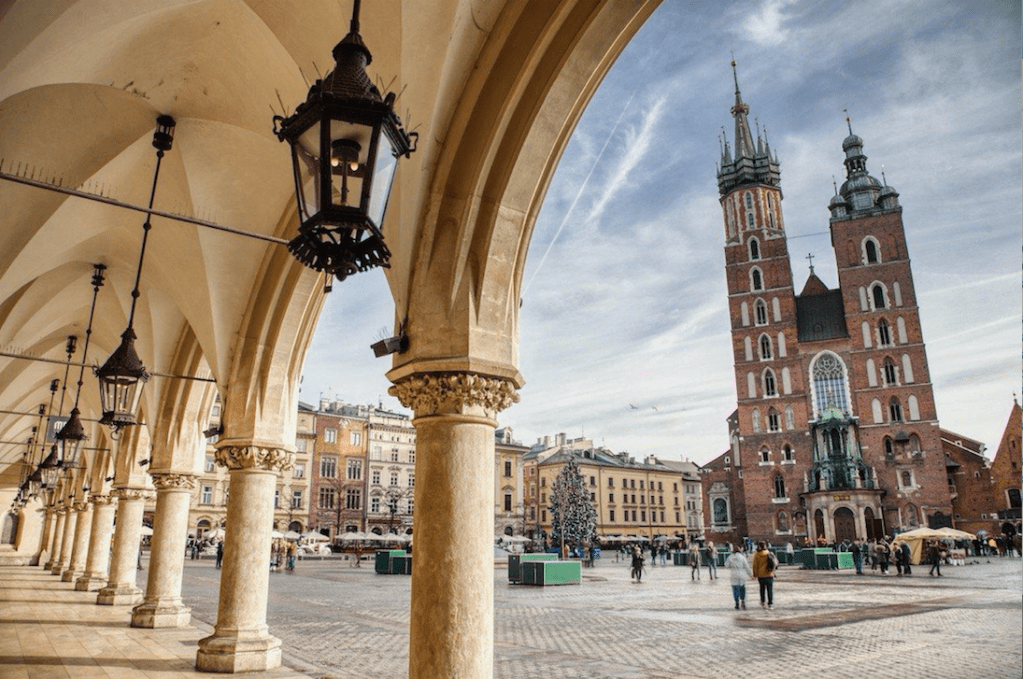
The tour then took us to The Cloth Hall which dominates the centre of the main market square. This building was once the heart of Krakow’s medieval clothing trade. The ground floor is now a shopping area for crafts and souvenirs. The Main Market Square is the largest medieval square in Europe.
Tickets cost £14.00 per person
Wawel Cathedral and Castle tour
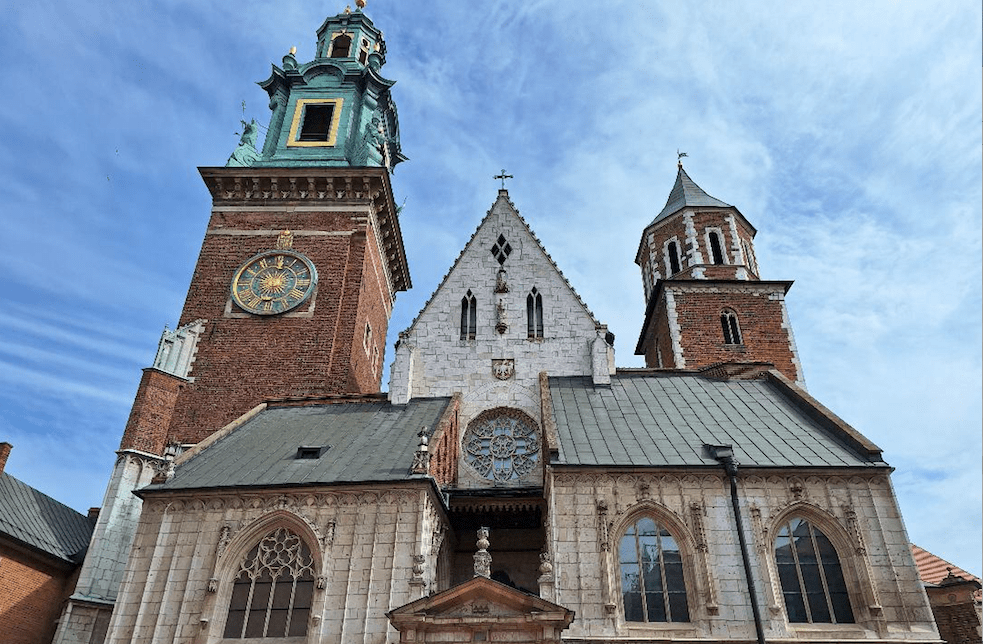
A trip to Krakow should include a trek up the stately Wawel Hill to pay respects to the former seat of the Polish monarchy. The grounds are free to enter and the scale, architecture and atmosphere are very impressive.
The ground floor state rooms in the Wawel Castle are where the royals received guests, held court and entertained. The tour takes you through the monarchs’ private lives by peeking into their bedchambers with four poster frames.
Tickets cost £44 per person

“Polish street food is around £2 – £5, sold everywhere and is delicious, the portion sizes enormous and very filling.”
Here are our restaurant recommendations for Krakow:
Jarema, Old Town
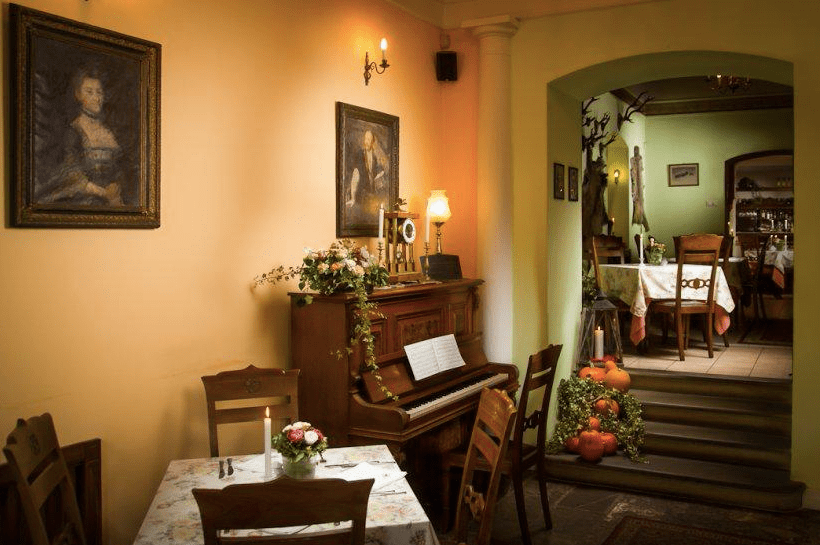
There are restaurants in Krakow that are quite clearly aimed at tourists, but Jarema is different, in that it offers its guests the authentic experience of a style of Polish Royal cuisine in very elegant surroundings. It has featured in the Michelin guide for nine years. It is moderately priced, suits all ages, great for local experience and is off the beaten track.
Total cost: £23.77 per person.
Pierswy Stopien, Kazimierz
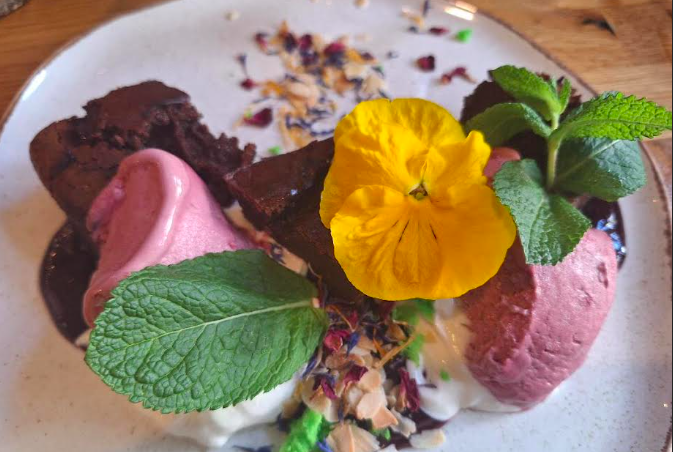
This was best restaurant we visited and I simply cannot recommend this enough. If you’ve seen watch Schindler’s list, you will see a scene of the street this restaurant is located on.
Warm, cosy, and charming atmosphere in one of the best districts in Krakow. The deconstructed chocolate cake (above) was possibly one of the best desserts I’ve ever had.
We booked weeks in advance for lunch, and it was fully booked when we arrived i.e. every table was taken. I think a testament to the restaurant’s popularity. It is terrific value for money based on the flavours, portions, and amazing service. Suits all tastes but particularly good for vegetarians and vegans.
Total cost: £25.00 per person
Veganic, city centre
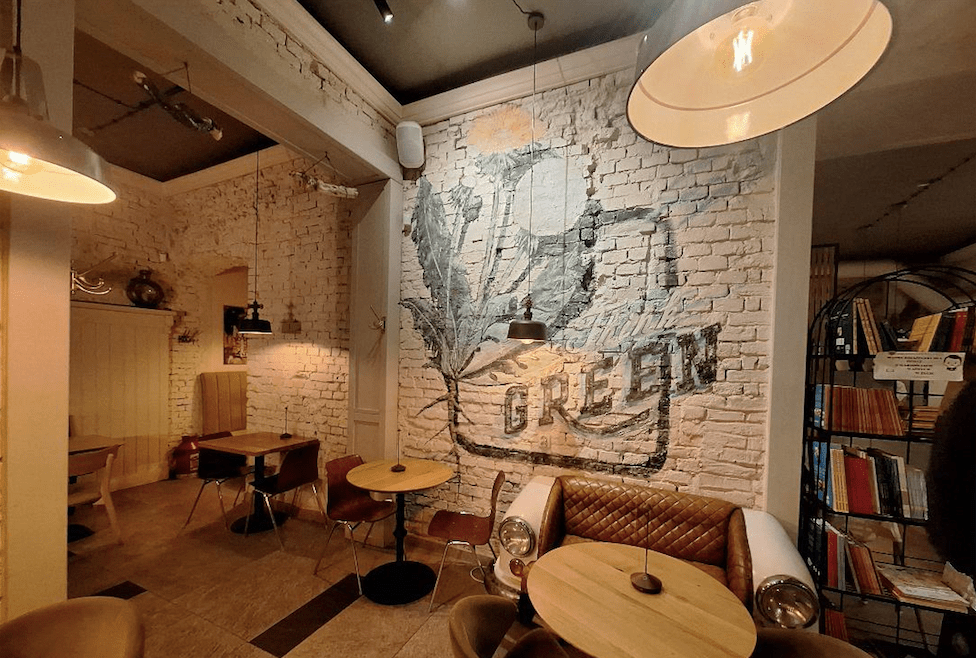
Around 90% of their dishes are vegan and they are open from breakfast to dinner. They serve up amazing smoothies and other handmade non-alcoholic drinks in a funky establishment complete with a large terrace. It is a welcoming space with plenty to excite.
This place is great for healthy, delicious vegan food but something to note – they don’t serve alcohol!
The total cost: £21.50 per person
Restaurant Sukiennece, Main Square

This restaurant offers a terrific view of the Market Square. It serves classic Polish dishes derived from royal traditions. Its major features include homemade bread, soup and local dumplings. It is a popular tourist spot and a suitable place to go for a quick bite and a few vodkas!
Total cost: £3.10 per person!
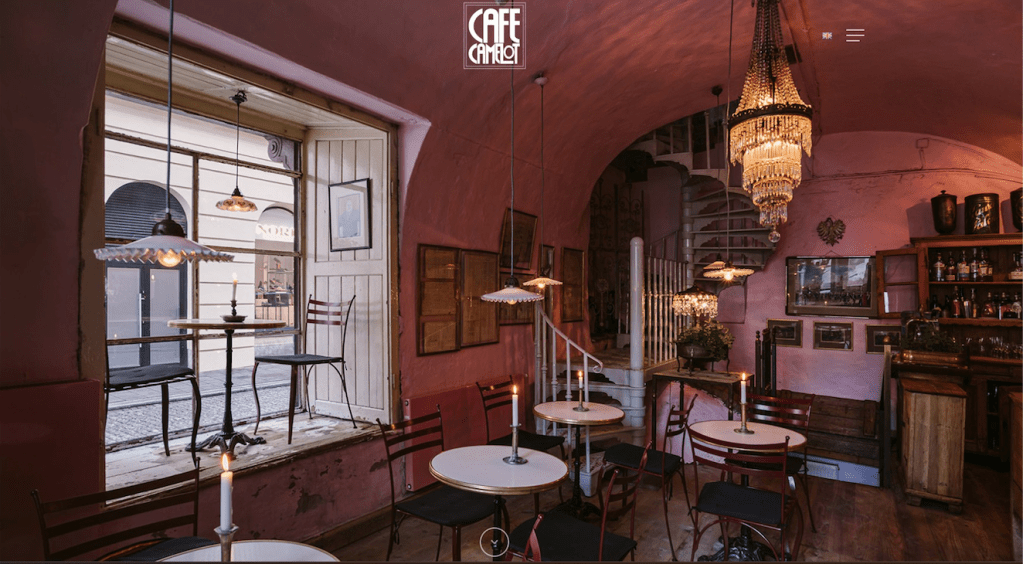
This is a lovely café we found within one to two minutes of our hotel. It has a great history and is an easy going but grand café. We devoured bagels, croissants and lots of cocktails.
To be honest, we lost track of how much we spent!
Weather in Krakov:
The weather in April was nothing short of extreme! For the first two days it was 25 degrees, sunny and hot. The third day the temperature dropped to 5 degrees and it snowed whilst we were walking through the Jewish ghetto. The third day was 10 degrees and sunny. So, we had summer, winter and autumn in the four days we were there!
Speaking to the hotel staff and café staff, this is the norm in Krakow, so I would recommend packing for all weathers.
Getting to and from the airport:
Katowice Airport, to where we flew, is located outside of Krakow and took around an hour by taxi to the hotel. The airport experience was smooth and quick, there were no traffic hold ups and we managed to see a bit of Poland on the way and speak with the taxi driver for any tips/things to do on our stay.
Most flights, however, fly direct to John Paul II International Airport which is closer to Krakow City. This is located around 30 minutes of the old town. There are special airport trams that connect the airport with Krakow’s main station and a city bus that runs to Krakow’s bus station.
Overall, a visit to Krakow is a unique experience of both past and present.
We have had a taste, but we want to taste more … here is to our next visit: “Na zdrowie!”
Viv booked a city break package on Booking.com for 3 nights, including Wizz Air return flights from Luton to Katowice Airport and hotel (room only). The package excluded transport to and from the hotel.
The flight journey took two hours each way and the total cost of the package was £385 per person.
You can read Viv’s review of Brussels here.
Liked what you just read? Please subscribe to The Sun Lounger for more travel news, reviews and interviews.
You can follow The Sun Lounger on social media:
https://www.instagram.com/thesunlounger/
https://www.facebook.com/thesunlounger